Summer has a curious effect on our homes. Not because it transforms them, but because it finally gives us the time to notice them.
Books move from the bedside table to the living room table. A chair is taken out onto the balcony, a table is extended to accommodate a few more people. The windows stay open late into the evening and the boundary between inside and outside becomes blurred. The spaces seem to change function almost without us realising it, but perhaps it is simply the way we live in them that is different.
Room for time - THE WINDOWS STAY OPEN FOR LONGER
For most of the year, we move through the house following a set routine.
For most of the year, we move through the house following a set routine. We move from one room to another almost automatically, following the day’s schedule. In summer, however, time slows down and the house ceases to be merely a place we pass through. It becomes, once again, the place where we stay.
For most of the year, we simply move through the house. In summer, we really begin to live in it.
Perhaps this is precisely why certain rooms take on a new meaning. The rooms themselves do not change, but the time we spend within them does. We notice where the light falls in the afternoon, the chair we always end up reading in, the table around which friends gather when they drop by unannounced. Some spaces suddenly become indispensable, whilst others simply cease to play a role. It’s an almost imperceptible change, yet enough to bring out a different idea of home: less tied to functions, closer to everyday gestures and the time we choose to devote to it.
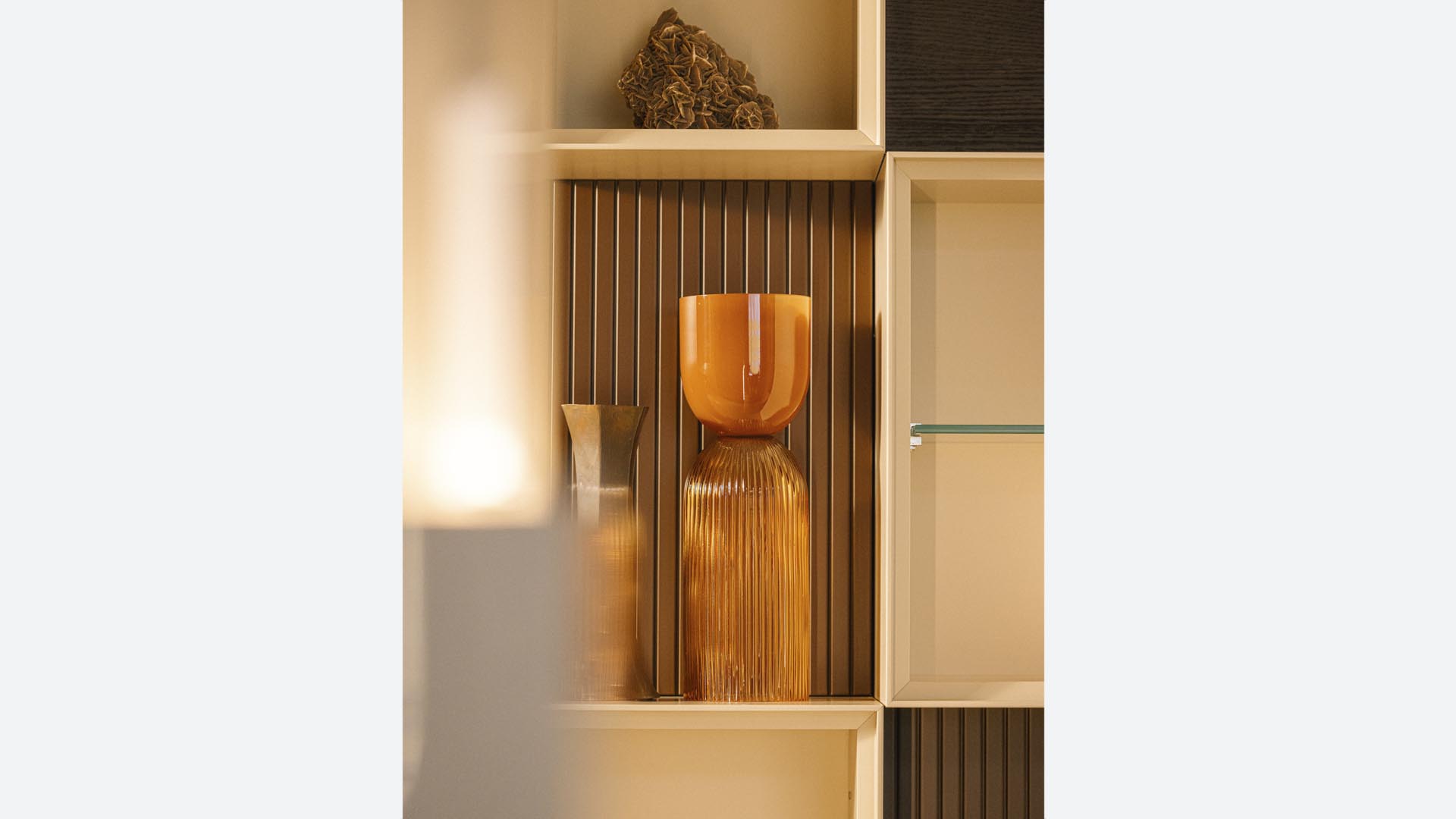
Summer doesn’t change a home. It reveals the way we live in it.
Summer doesn’t change a home. It reveals the way we live in it.
It’s a perspective that also changes the way we think about spaces. Designing a home isn’t just about imagining how it will look, but how it will be lived in. On busy days as well as quiet ones, during winter as well as on those summer evenings that seem to go on forever.
This idea gave rise to the concept of Room For. Not a space that dictates a single way of living, but an environment capable of adapting to people’s rhythms and allowing their habits to define its character.
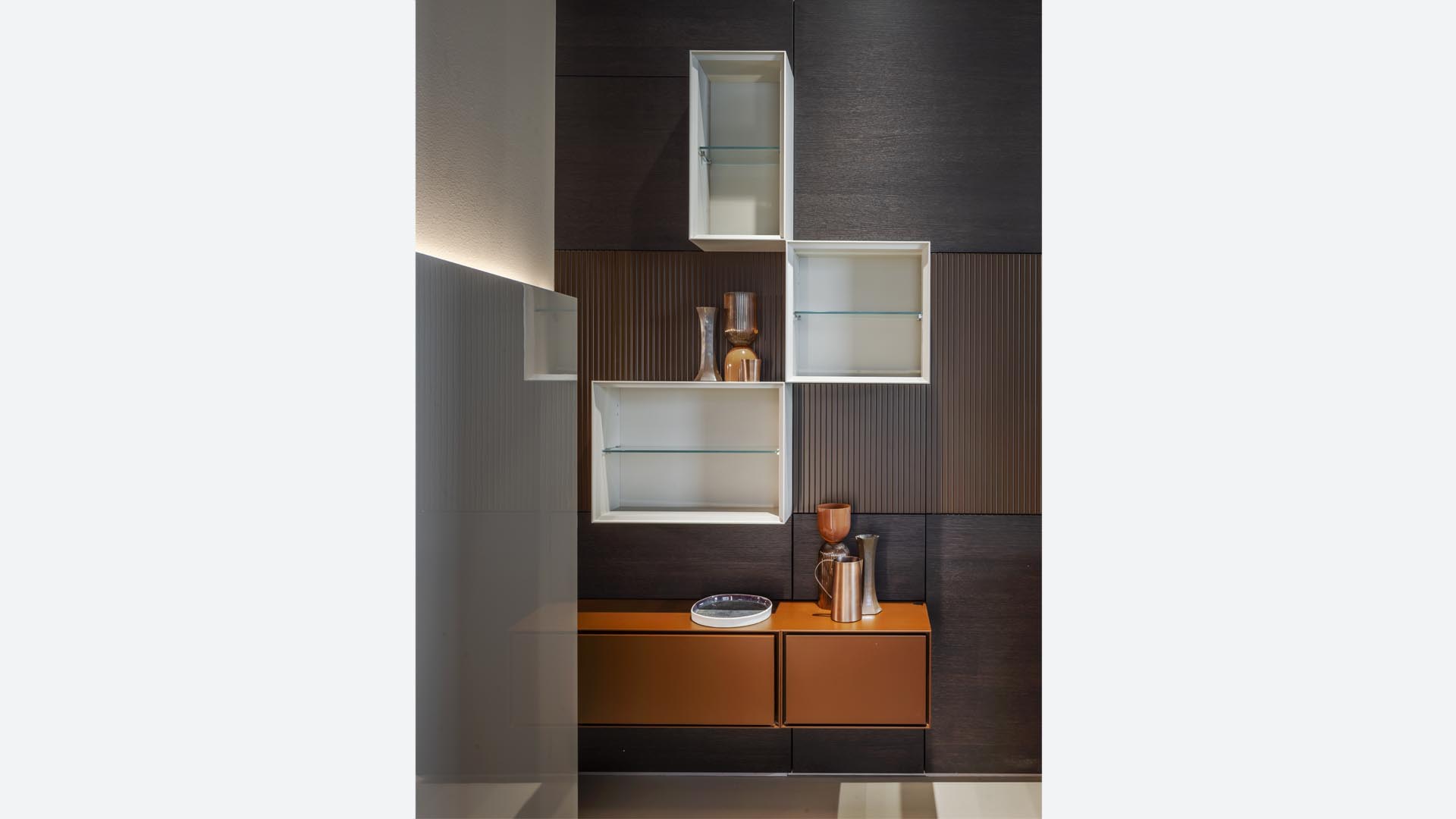
Rather than simply designing a composition, Alf DaFrè’s living room collections – and the new Day collection in particular – create an open system in which storage units, modular elements, panelling and surfaces can accommodate different ways of living in the home over time. Because a well-designed space is not one that serves a specific function, but one that continues to work as life changes.